How to Deal With the Lack of Data in Machine Learning
What to do when there is not enough data to train a machine learning model: how much data you actually need, open data sources, manual labeling, simulation, synthetic data generation, and what pretrained models changed - from a team that ships models on small, messy datasets.

Every machine learning project starts with the same uncomfortable question: is there enough data for this to work? Usually the honest answer is “not yet.”
The lack of data in machine learning is the most common reason a promising project stalls, and it is also the most fixable. Lack of data, meaning too few examples or examples that miss the cases production will send, rarely announces itself. A model needs enough examples to learn the pattern and enough coverage to meet the cases it will face in production. When either is missing, the model does not warn you. It confidently produces wrong answers, and that is where the trouble begins.
This guide covers how much data you actually need, where to get more, and the techniques that work when you cannot: open data, manual labeling, simulation, synthetic data generation, and, since the last update, pretrained models that need a fraction of the data they used to.
Machine Learning and the Importance of Data
Machine learning, the part of artificial intelligence that most business projects actually use, is the process of providing an algorithm with real data so it can learn a pattern from experience rather than from hand-written rules. The model is trained the way each of us learns: from examples. The problem is that a model needs a certain amount of data for reliable training and evaluation, and if the data is insufficient, the project cannot deliver a reliable result.
Training data shortage is a crucial issue also because a model that is unsure about a result does not signal its uncertainty by default. It completes the prediction without any worrisome signs. Inadequate data - too little of it, or the wrong distribution - means more hidden doubt and more inadequate outcomes. Without access to data it is impossible to prepare a training set, and even the best software does not matter without it. “No access” also means the data is either too complicated to get or does not exist yet. That is why big promising AI projects often end up less successful than expected: data scientists are limited in how they can acquire and prepare machine learning data, not in how they model it.
Data Size: How Much Exactly Do You Need?
The question about the right amount of data never goes out of fashion, because there is no universal answer. Each project needs an individually sized dataset, depending on the data type and the model. Computer vision trained from scratch needs far more than a text classifier built on a pretrained language model. It is equally wrong to drown a model in data or to starve it.
Too Little Data
Lack of data is the most common yet fixable machine learning issue. You can either collect data yourself or find open data. Open data is one of the favorable outcomes of the “open movement” that has made machine learning far more accessible. According to freecodecamp.org, the most useful open data sources from which you can build large datasets include:
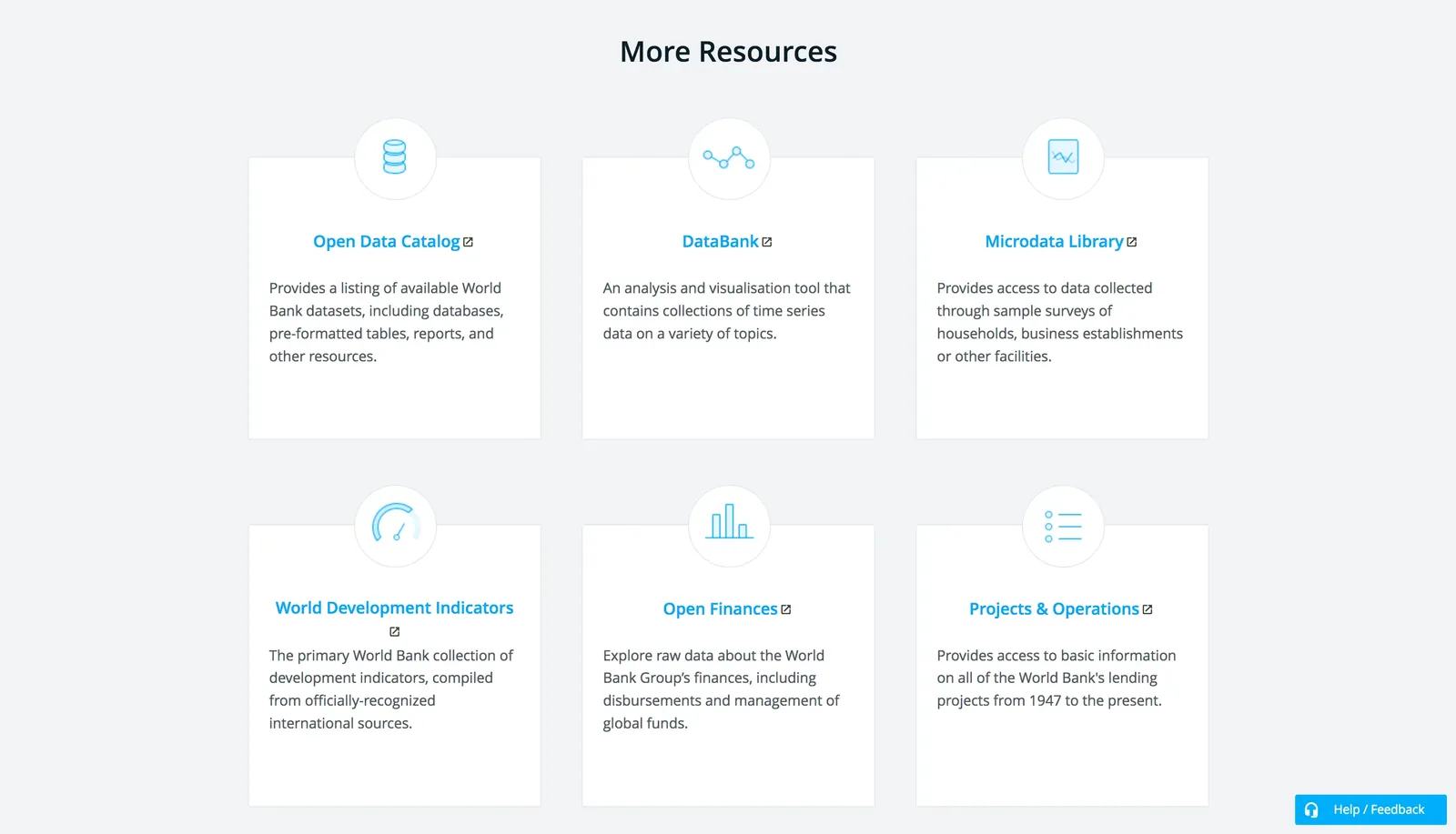
- World Bank Open Data
- WHO (World Health Organization)
- Google Public Data Explorer
- European Union Open Data Portal
- U.S. Census Bureau
- Data.gov
- DBpedia
- UNICEF Dataset
Add to that the dataset hubs that did not exist when this list was written: Hugging Face Datasets and Kaggle now host tens of thousands of labeled sets for vision, speech, and text. The open movement keeps gaining momentum and makes data scarcity less severe every year.
Too Much Data
Too much and too little data are both harmful extremes. It may seem that more is always better, but it is not entirely true. Data overload makes training slow and expensive, and irrelevant or duplicated records pull the model toward the wrong pattern. The amount of data is not the thing that matters most. Its cleanliness and coverage do.
Clean Data
Apart from data scarcity and data overload, there is the problem of data cleanliness. The web contains tons of noisy datasets and unsystematic data flooding in at high speed. Anyone can point out a low-quality image, a song with background noise, misspelled words, or a website full of false information. So the information overload does not just mean open space for AI initiatives, but a considerable amount of sorting work.
So how much data do you need for machine learning? You have to figure it out for your project, considering its size and the type of data it requires. The critical point is to make the data as clean and as representative as possible.
How to Deal With the Lack of Data in Machine Learning
Collecting data yourself or looking for open sources is not the whole answer to “how to generate data for machine learning.” Practitioners have been working on this for years and settled on a few reliable ways to tackle the main obstacle:
- Data Simulation
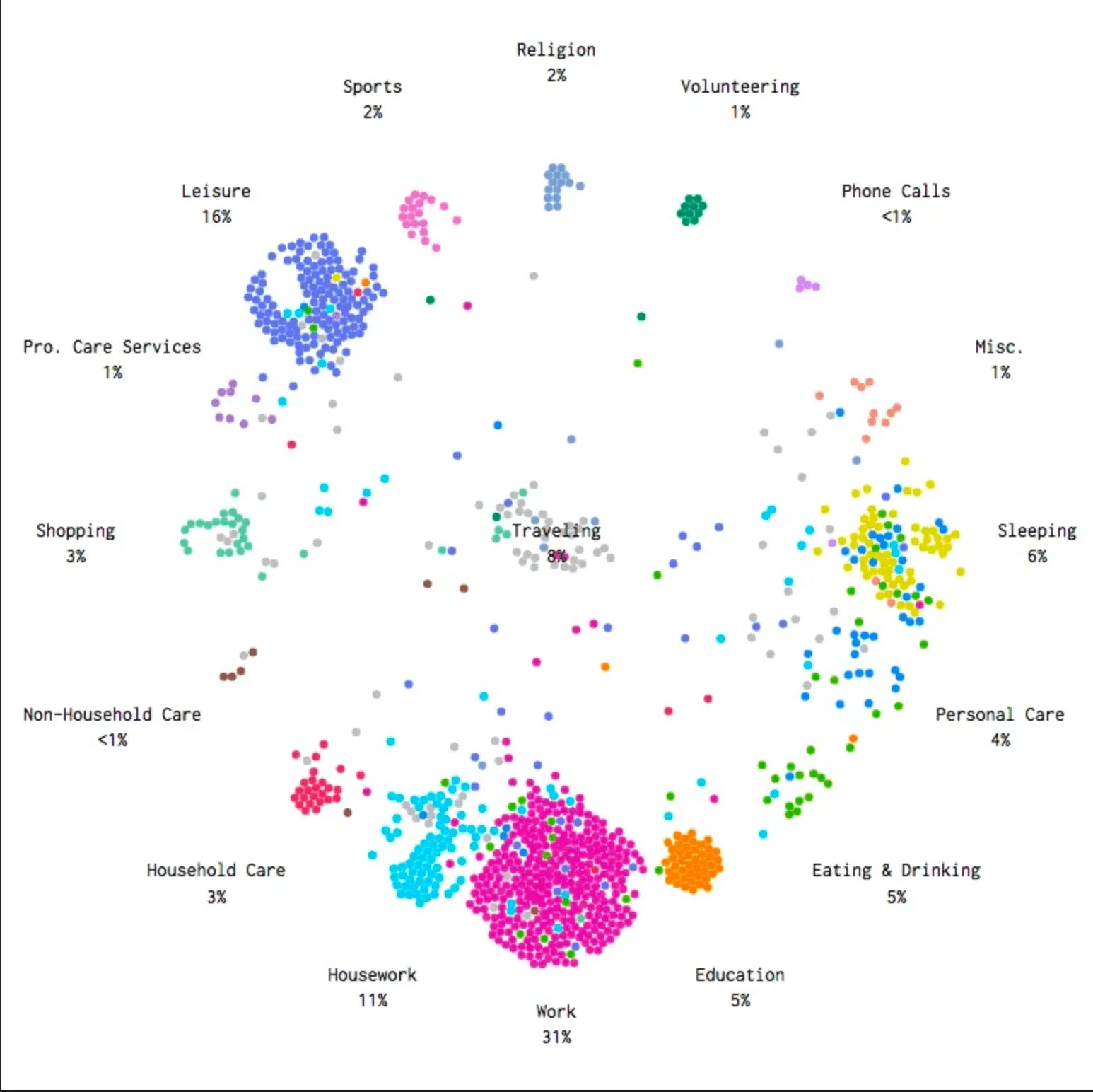
Data Simulation Depicting the Average American Day. Source:Cool Hunting
Simulation generates training examples from a model of the process itself: a physics engine, a game engine, a rules-based simulator of your business. Robotics and autonomous driving run on it. The catch is the gap between the simulator and reality; models trained in simulation need validation on real data before anyone trusts them.
- Manual Data Labeling
Modern computer vision models can process photos and video with little labeling thanks to pretraining, but most supervised tasks still need human labels because the model cannot identify what matters without hints. Creating custom labeled data is time-consuming and does not scale well, which is why the practical approach is a small, high-quality labeled set used to fine-tune a pretrained model rather than a huge one used to train from scratch.
- Synthetic Data Generation
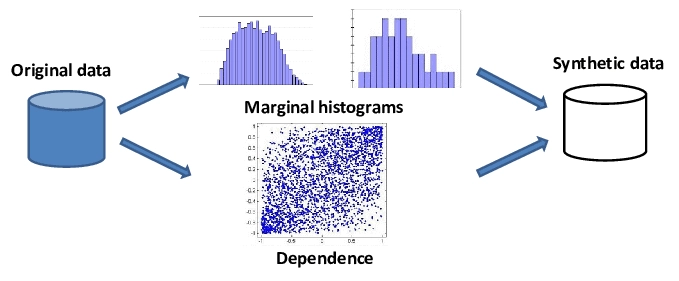
Synthetic Data Generation. Source
In the age of big data, remaining anonymous is close to impossible. Synthetic data lets you build a closed system in which you can safely test your project, generating records that may not even exist in reality.
Synthetic data is the cheapest and most convenient way to generate training data, and it requires no manual input. It has the same statistical shape as the original data with the personal information removed. Data scientists use it where exposing real people’s data is not acceptable. Privacy is the primary benefit: it gives room for training and software development while keeping customers’ personal information untouched.
Business-related AI projects take the most significant advantage of synthetic data. It serves three purposes: realistic testing, training machine learning algorithms, and zero exposure of real records. With synthetic data generation there is no need to choose between privacy and data utility. Data scientists can use almost 100% synthetic data in analysis and deep learning. As a result, synthetic data generation might be the answer when you have none for your project.
What changed: pretrained models need far less data
The biggest shift since this article was first written is that you rarely train from scratch anymore. Foundation models for text, images, and speech have already learned the general structure of their domain. Your job is to teach them your specific task, and that takes a few hundred to a few thousand examples instead of millions.
Three consequences for a team running out of data:
- Start from a pretrained model. Fine-tuning a vision or language model on 500 labeled examples routinely beats training a custom model on 50,000.
- Use the model to label. A large model can produce first-pass labels that humans correct, which cuts labeling cost several times over.
- Let data scientists spend the labeling budget on the hard cases. Artificial intelligence budgets die on easy labels bought in bulk. With pretraining handling the easy ones, the remaining errors cluster around rare and ambiguous inputs. That is where each label is worth the most.
Low-data AI is now the normal case, not the exception. Machine learning without data is still impossible, but machine learning with less data than you expected is routine. None of this removes the need for real data from your own distribution. It moves the question from “how do we get enough data” to “how do we get the right two thousand examples.”
External Influence: Data Struggle During COVID-19
A model may operate well within an everyday environment and still suffer significant setbacks during any evolving crisis. People adapt to almost any external change; models do not, because they cannot generate new answers outside the patterns they were trained on.
The COVID-19 outbreak showed this fragility. Data scarcity on the new disease made AI health systems unreliable, and predictions failed on outdated patterns.
Retail was affected the least, since ecommerce saw a remarkable sales rise, but the algorithms still broke. The usual top-selling items were replaced by pandemic-related ones that had to be identified and stocked within a limited time. Such sudden changes caused algorithm glitches, proving how dependent a model is on the data it was trained on. Engineers call this concept drift, and the fix is the same today: monitor the inputs, and retrain when the world changes. That monitoring-and-retraining loop is the last stage of a proper machine learning pipeline.
The Bottom Line
Lack of data in machine learning is still the weakest spot of any project. Without enough of the right training data, a model cannot show reliable results, just as people rarely find their way out of situations they have never been in or heard of. Data scarcity in AI is not going away, but the ways around it keep multiplying: open datasets, synthetic data, simulation, and pretrained models that need a fraction of what they once did. The teams that ship on small datasets are the ones that treat data as an engineering problem from day one.
If your product depends on a model and your dataset is smaller than you would like, that is a normal starting point for the projects we take on. Our custom AI development pilots begin with a data audit precisely so nobody discovers the gap in month three.
FAQ
How much data do you need for machine learning?
It depends on the task and the model. A pretrained model fine-tuned on a narrow task can work with a few hundred labeled examples; a computer vision model trained from scratch wants tens of thousands; a tabular model needs enough rows to cover every important combination of features. Start small, measure, and add data where the errors are.
What do you do when there is not enough data for machine learning?
In order of cost: start from a pretrained model instead of training from scratch, use open datasets to pretrain or augment, generate synthetic data, augment what you have, label a small high-quality set by hand, and simplify the model. Most real projects combine two or three of these.
What does “data insufficient” mean for a machine learning model?
That the training set does not cover the situations the model will meet in production, so the model either underfits or fails on cases it never saw. The fix is rarely “more rows”; it is more coverage of the rare and important cases, plus a model that knows when it is unsure.